Care Advantage
  • Home
  • About
  • The Assessments
  • The Reports
  • Pricing
  • Benefits
  • Blog
  • Contact

Blog

Care Advantage Reduces Frontline Staff Risk

9/20/2018

0 Comments

 
Quick Wins for Avoiding Performance & Misconduct Risk
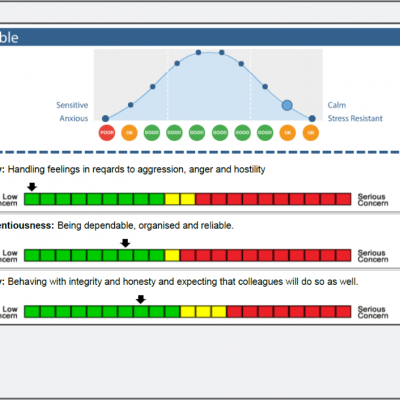
Attitudes Report Hostility Concern
a real - anonymous - report from someone who applied for a frontline care role
​In a consumer driven market with frontline staff being the regular and principal touch point for service users, providers have to manage employee related risk in both traditional and emerging areas of their business.

Misconduct Risk
The commitment to protect service users in the sector is clear and undiminished. The processes to ensure this, however, are often found wanting and scrutiny from the regulator, media and community has never been greater. Reputational damage in a competitive marketplace haunts provider for years, especially in the local community near an incident. Misconduct extends beyond high profile incidents seen in the media to include indifference, neglect, culpable behaviour and dishonesty impacting on clients/residents.

Performance Risk
User Experience is the new battleground in the aged, community and disability sectors. Empowered clients, with choice, and increasing expectations continues to move social care into a consumer driven competitive marketplace. The engagement and relationships built by frontline staff, combined with the quality of the support provided are pivotal for success in today’s care sector. Ensuring employees are suited to roles requiring the delivery of care, support and compassion is fundamental to effective staff performance in social care.

Frontline capability now translates directly into Bottom Line Performance

Some Facts

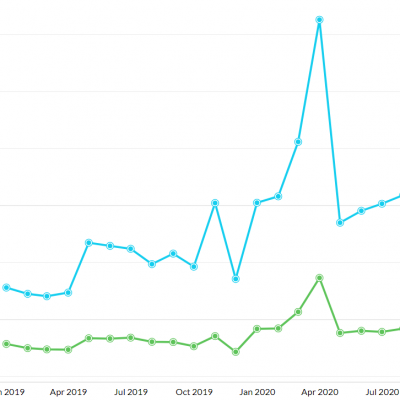
We took a sample of over 15,000 frontline care applicants screened during the past year. Using the standard Care Advantage assessment for counter-productive work behaviours - Hostility, Integrity and Dependability, we found the following:
Concerns in work attitudes
Some Quick Wins
Are our applicants ‘right’ for the sector?
Care Advantage screens specifically for job fit in the Social Care sector. It identifies those candidates with the values, empathy and personality necessary for success in a human services environment. It compares your applicants to a benchmark of proven good performers in the same role and identifies those with a strong job fit. Benchmarks exist for around 40 roles in the care sector including personal carers, disability support, home care assistance, Registered Nurses, Clinical Managers.

Can we identify the level of risk with our applicants?
Care Advantage also screens for counter-productive work behaviours, specifically hostility, dependability and integrity. Flagging high-risk profiles allows providers to avoid or increase scrutiny of applicants.

How do we Avoid Missing Good candidates?
Most Care Advantage users screen applicants high in the recruitment funnel, when the candidate first applies. The screening platform has been designed, and priced, to allow employers to review high volumes of frontline applicants in an effective and rapid manner.

Identifying strong job fit and lower risk candidates early in the recruitment process provides significant competitive advantage by reducing misconduct and performance risk whilst improving efficiency and speed of recruitment processing. As the assessments are based on personality, the screening identifies all good job fit, lower risk candidates, regardless of work history, enabling our clients to find the ‘Hidden Gems’.

Governance
With 'Standard 8' of the, now legislated, compliance regime starting next year, there are a number of new requirements. The majority of these involve the ability to demonstrate that the organisation possesses a governance framework that recognises the organisation’s purpose, its legislative, policy and ethical obligations, as well as its workforce and employment responsibilities. Care Advantage allows users to demonstrate an effective framework, as part of a contemporary recruitment process, that identifies candidates able to support service users in a person centred and safe manner.

Contact us to discuss your situation. 
0 Comments

Practical Tips to help stabilise your Care Workforce

7/17/2018

0 Comments

 
Picture
With an increasingly consumer driven environment, added pressure on funding, a care workforce whose average age is also increasing and clients/residents living longer it is no wonder there is a strong focus on ensuring that a future aged care system remains sustainable, affordable and flexible.
 
Of the 5 Strategic Imperatives identified by the Aged Care Workforce Strategy Taskforce (ACWST) – headed up by Professor John Pollaers – one of the most critical has been the industry’s ability to attract and retain care staff.
 
For many years we have worked together with Neil Eastwood, a highly regarded advisor and consultant on workforce recruitment and retention in the Social Care sector in the UK. Neil is the author of Saving Social Care which tackles this very subject. The UK has been operating in a consumer driven environment around 8 years now and whilst funding arrangements and regulation are different, there are many common challenges.
 
With great thanks to Neil, we have adapted his Practical Tips Program and created 52 weekly tips to help you better source, recruit and retain your care staff. Here is a sample, but if you want to get all of them, across the full year, sign up to our Weekly Tips mailing list.

Sourcing

1. Your relationship with Universities Nurses and allied health students get great feedback as frontline staff. They can’t stay forever but can often work less popular hours. Can you offer some practical training directly related to their course? Try the tutors, student welfare, noticeboards and referrals to get started.
2. Online sources can miss older Care Workers: Mobile job seekers are weighted towards the <25s, Facebook is most used by 25-34yr olds, but longest serving care staff are 50+. Make sure you don’t forget offline sources too..

Screening

​3. Non-committal responses: It’s important to listen for non-committal responses to interview questions about availability, pay etc. such as "I think so", "That's fine", Not really". These are proven flags to non-commitment and easy to spot if you are aware. Then the interviewer knows to dig.
​4. Care workers can make insightful interviewers: Involve care staff in interviewing candidates. They know what the job entails and being asked assists staff engagement which is a critical part of retention.

Retention

5. Smile more: Approximately 17% of resignations reported a friendly smile or a helpful colleague would have changed their mind. The early days of employment are so critical for long-term tenure.
6. A role for performance-related pay? Rarely used in care but successful elsewhere - recognise six months with no lateness or missed shifts (e.g. 1 hour off paid per month). If you have an absence issue this could be worth a trial.
Enjoyed these tips? Click here to sign up to more of these (interesting, relevant, surprising, clever) gems. 
0 Comments

Screen smarter, Hire better

11/14/2017

0 Comments

 
Recruitment refers to the overall process of attracting, selecting and appointing suitable candidates for jobs within an organisation. Some people have made this their profession and love finding that right match, for others, these activities are a necessary evil to their normal job. No matter which one you are, you probably want to be more efficient with your screening process yet have more insights to make better hiring decisions.
 
For this article, we will only look at the selecting or screening part of the process, because this is where decisions are made that can either mean a win or a big loss for your organisation.
The traditional recruitment screening process
In the Aged and Community Care sector, the commonly applied screening process looks something like this for a popular frontline care role with, say, 90 applicants:
Picture
Total time: around 15 hours!
What a resume doesn’t tell you
This probably doesn’t come as a shock, but the resume often doesn’t say anything about the applicant’s personality, values, work behaviours and motivation, unless they specifically included this, which is the exception to the rule. And did you know that hiring someone based on their resume alone has a predictive validity of just 0.2 (if that, as this number can be lower depending on the study*)? This pretty much means that the resume poorly predicts an applicant’s success in the role, however the first cull is often based on this piece of information alone. Think about all the talents that you could miss out just because their resume. Thereby, the resume screen is a huge time consumer/waster especially for those popular entry-level roles! 
Skills can be taught, personality cannot
We are seeing some large levels of turnover in the sector, which has an industry average of around 25%. The cost of turnover is approximately 20% of that employee’s annual salary, making replacing staff very costly so something you want to get right from the start. 

​Example:
Picture
​There are many reasons that staff leave your business and a certain level of turnover is considered healthy, but do you keep track of what percentage of your staff has left for personal reasons (moving town, retiring, health issues) or because they were let-go by you? When we look at the reasons that staff are terminated by the organisation, these are often summarised as “they were fired for who they are and how they behaved on the job”.
 
So how can we find out more about our (frontline) applicants, their personality and work behaviours early on in the process and not solely base our first cull on what they know or can do?
The more efficient screening process
Enter behavioural screening. We know that psychometric assessments are not revolutionary to the screening process, but it is proven and ever-evolving. We have now entered the era of the 6th generation of psychometric screening and are seeing a shift in focus from testing skills and aptitude to finding people with the right personality and attitude for the job.  Because if you select those people who are more likely to have the right personal attributes and work-attitudes for the role, then you already have a head-start to reducing the number of people you will eventually fire for “who they are”. Studies* show that using behavioural and cognitive assessments in combination with a validating interview has a predictive validity of .76. That’s pretty much as high as it gets.
 
So, let’s see what the recruitment process can look like when adding behavioural screening.
Picture
​Adding behavioural screening at the top of the screening funnel can take the screening part down to a little over 5 hours with an increased predictive validity! The time saving is achieved by reading less resumes and in this case as well by the removal of the assessment center step in the process. However additional time savings can be found in reduction in no-shows at interview, a more structured interview process, better hiring decisions and thus reduced staff turnover (saving you time recruiting again!). As you can see below, in our example this company reduced their staff turnover by 5% saving themselves annually $80,000 in recruitment and related costs. 

Example - reduced turnover
Picture
So here you have it. Even though it looks like you’re adding a step to your screening process, you are actually adding robustness to your screening process without adding extra time. On the contrary, you’re screening smarter, with more insight into your applicants resulting in better hiring decisions. ​
* Schmidt, Frank. (2016). The Validity and Utility of Selection Methods in Personnel Psychology
* https://hbr.org/2014/08/the-problem-with-using-personality-tests-for-hiring

0 Comments
<<Previous

    Archives

    October 2018
    September 2018
    July 2018
    November 2017
    July 2017
    March 2017
    February 2017
    January 2017
    December 2016
    November 2016
    October 2016

    Categories

    All
    CDC Videos
    Leadership
    Psychometric Assessments
    Recruitment
    Retention
    Risk
    Screening
    Values & Behaviours

    RSS Feed

      STAY CONNECTED

    Sign Up

Care Advantage

The assessments
The reports
Benefits
Research & Validation
​Pricing

Support

Contact
☏ ​1300 059 699
FAQ
Terms of Use
Privacy Policy

CARE ADVANTAGE IS POWERED BY BIG5ASSESSMENTS
© COPYRIGHT 2018. ALL RIGHTS RESERVED.
  • Home
  • About
  • The Assessments
  • The Reports
  • Pricing
  • Benefits
  • Blog
  • Contact